

If you are searching for software to manage a car wash, beauty salon, gaming parlour, or service business, the core issue is usually the same: the business sells work performed by staff and also sells physical products. Maduuka is built for that mixed model.
Many businesses do not sell only products or only services. They sell both, often in the same transaction. A beauty salon sells haircuts and styling, then sells shampoo or hair oil before the customer leaves. A gaming parlour sells one-hour gaming sessions, snacks, drinks, and accessories. A car wash sells cleaning services, but also air fresheners, mats, polish, and wiper blades.
That mixed model is where ordinary POS systems often become awkward. If the system is built only for stock, a service has to be forced into the product list. If the system is built only for appointments, product inventory becomes an afterthought. Maduuka is designed for the more realistic situation: a business can sell service work and physical goods together, while still keeping stock, cash, pricing, reporting, and customer history clean.
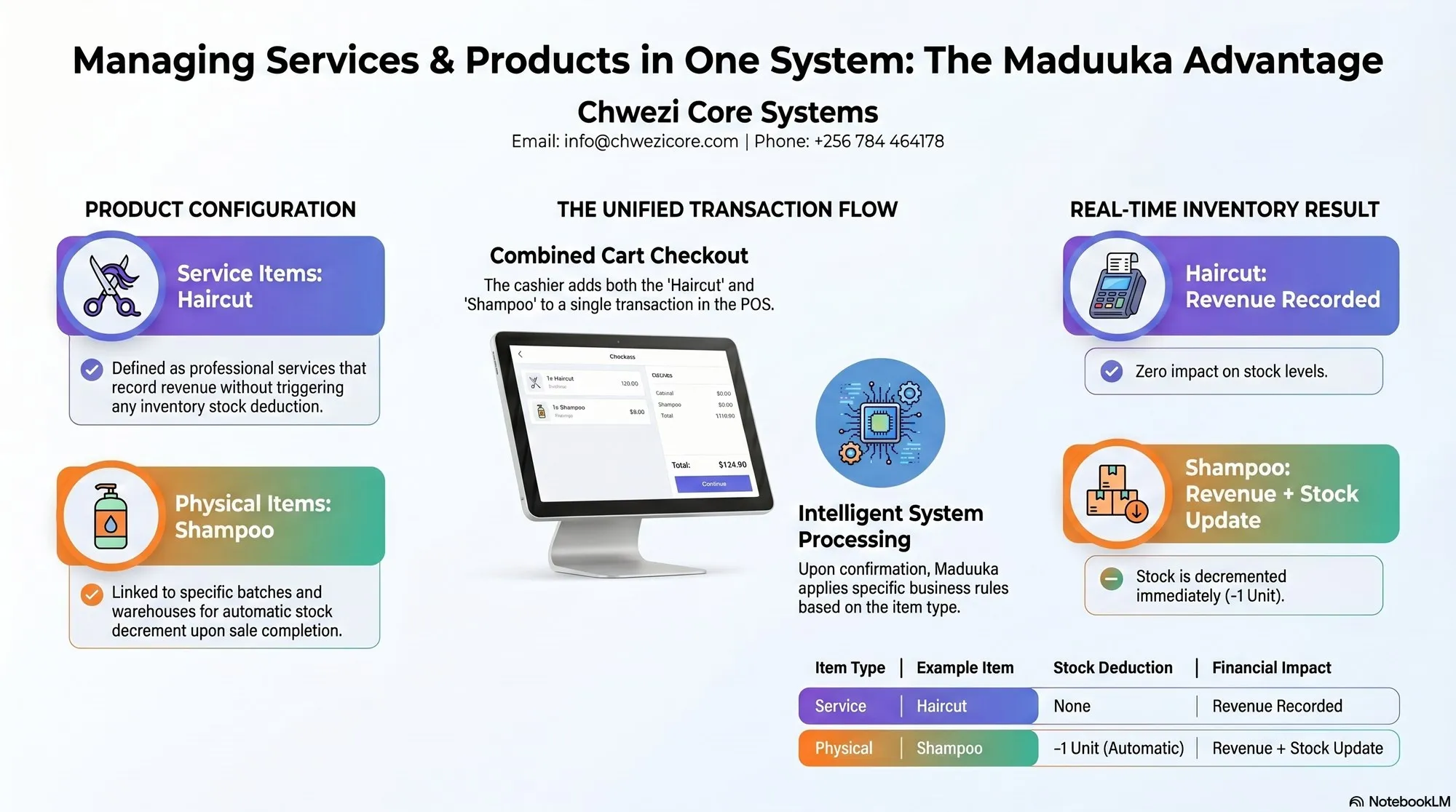
Operating Model
How one Maduuka sale can include services and products
The important distinction is simple: services create revenue without stock movement; products create revenue and reduce inventory. Maduuka keeps those behaviours separate while allowing the cashier to sell them together.
Set up services as sellable items
Haircuts, styling, gaming sessions, wash packages, waxing, detailing, repairs, consultations, and labour charges can sit in the POS catalogue as service items.
Set up products as stock items
Shampoo, conditioners, hair oil, snacks, controllers, screen protectors, car mats, polish, microfiber cloths, and wiper blades keep stock quantities, cost, and reorder visibility.
Sell both on one receipt
A cashier can add a service and physical goods to the same cart, apply approved prices, collect payment, and issue one clear receipt.
Track money and stock correctly
Service revenue increases sales without reducing inventory, while product sales reduce stock and feed product margin reports.
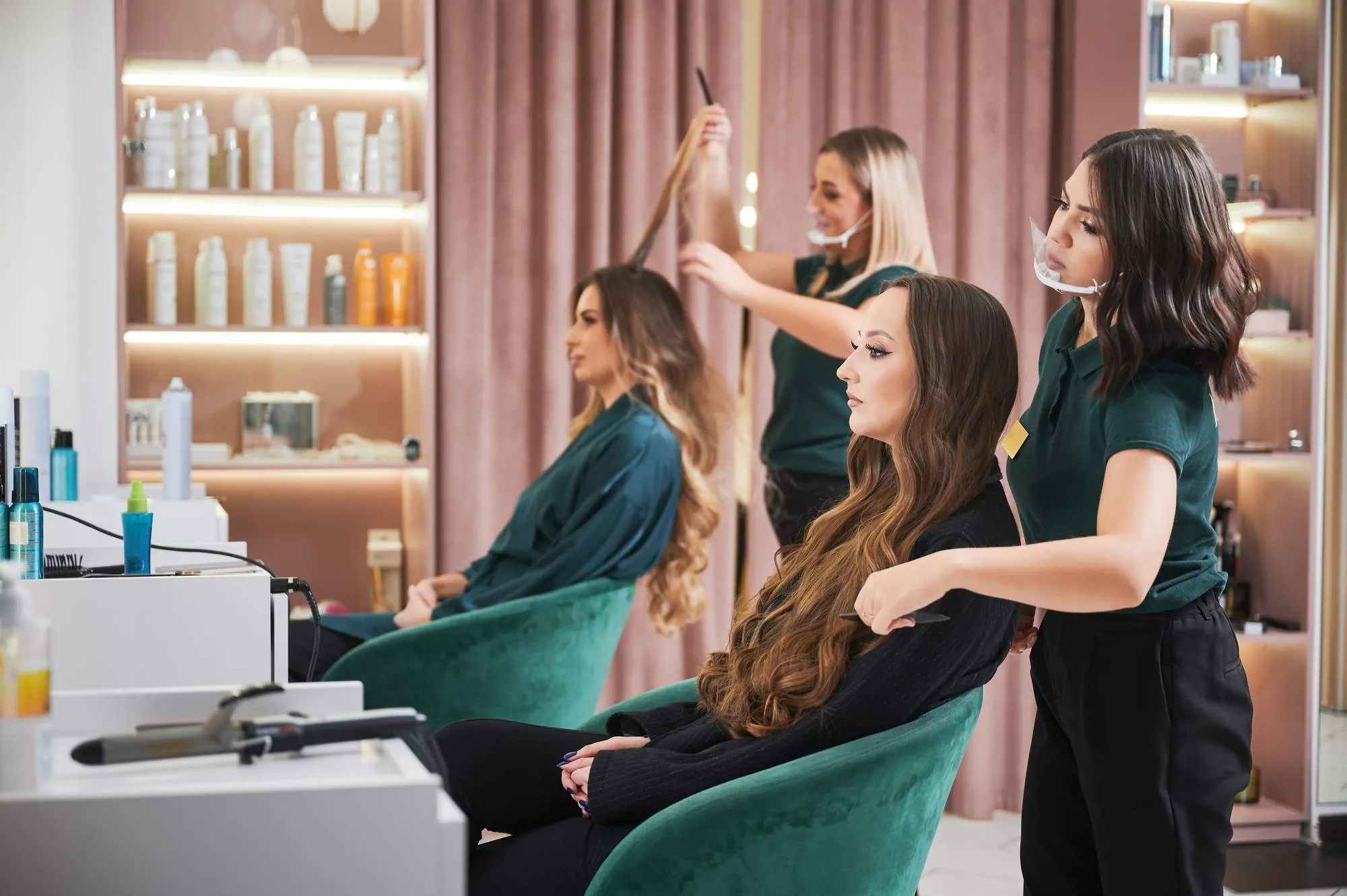
Example 1: Beauty salon selling hair services and hair products
A serious beauty salon runs far more than a chair and a price list. It may offer haircuts, styling, braiding, retouching, washing, blow-drying, colouring, treatment, make-up, waxing, nail services, and bridal packages. At the same time, it may sell shampoo, conditioner, hair food, oils, relaxers, wigs, extensions, combs, brushes, bonnets, and aftercare kits.
In Maduuka, the salon can set up haircut, styling, treatment, and make-up as service items. These can have fixed prices, branch-specific prices, staff-level prices, customer-group prices, or promotional prices. The shampoo and other physical goods are set up as products with stock quantities, cost prices, selling prices, categories, suppliers, and reorder visibility.
At checkout, a customer might pay for styling, a treatment, a bottle of shampoo, and hair oil on one receipt. The service lines increase service revenue. The shampoo and hair oil reduce product stock. Later, the owner can see whether styling clients often buy shampoo, whether treatments lead to conditioner sales, and whether retail products are improving margin beyond labour income.
Example 2: Gaming parlour selling timed sessions, snacks, and accessories
A gaming parlour has a different service pattern. The main sale is time: 30 minutes on a console, one hour on a gaming PC, a VR session, a private room booking, a tournament entry, or a party package. But many gaming centres also sell soft drinks, bottled water, snacks, charging cables, headsets, controllers, screen guards, gift vouchers, and branded merchandise.
Maduuka can list the gaming sessions as service items. The owner can create clear names such as "PS5 Session - 1 Hour", "PC Gaming - 30 Minutes", "VR Session", or "Tournament Entry". Snacks and accessories are products with stock control. A cashier can sell a two-hour session, two sodas, and a headset together instead of writing one amount in a book and selling products in a separate system.
The reporting value is significant. The owner can compare session revenue against snack sales by day, branch, and cashier. If Saturday tournaments drive accessory sales, that becomes visible. If drinks sell out during school holidays, reorder planning improves. If private room bookings are profitable but under-promoted, the numbers show it.

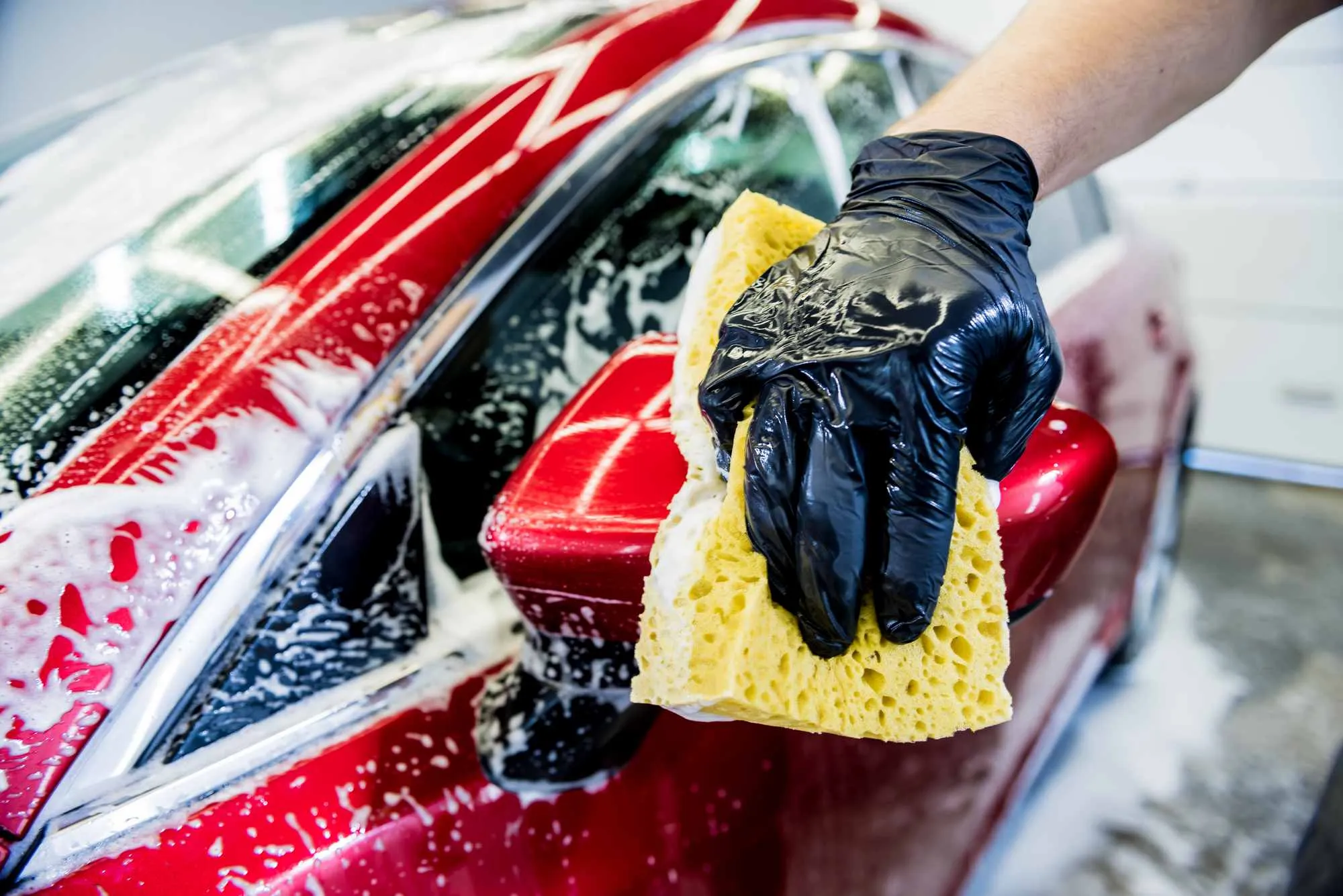
Example 3: Car wash selling wash packages and car accessories
A car wash may look simple from the outside, but the operating model can be complex. The business may sell a basic exterior wash, interior cleaning, vacuuming, engine wash, waxing, polishing, detailing, upholstery cleaning, tyre shine, motorcycle wash, and monthly fleet wash packages. It may also sell car mats, wiper blades, air fresheners, dashboard polish, microfiber cloths, phone holders, tyre pressure gauges, and other accessories.
In Maduuka, wash packages and detailing services are service items. Accessories are stock items. A customer can come in for a full wash and leave with an air freshener, new mats, and a microfiber cloth on the same receipt. The wash package does not reduce stock. The accessories do.
This matters because car wash owners often lose product visibility when accessories are treated casually. A busy attendant may sell air fresheners from a shelf, collect cash, and forget to record the item. Maduuka keeps the accessory sale inside the same POS flow as the service, so the owner sees revenue, stock movement, cashier accountability, and repeat customer behaviour in one place.
Use Cases
Three mixed-sale businesses in one view
The category names change, but the management question is the same: which lines are service revenue, which lines are product revenue, and what does each sale do to stock?
Beauty salon
Services
Haircut, Styling, Braiding, Treatment, Wash and blow-dry, Make-up session
Products
Shampoo, Conditioner, Hair oil, Relaxer, Wigs, Hair extensions
The salon sells labour-heavy appointments and retail stock from the same counter, then sees which services bring clients in and which products add margin after the appointment.
Gaming parlour
Services
30-minute console session, Hourly PC gaming, Tournament entry, VR session, Private room booking
Products
Snacks, Soft drinks, Headsets, Controllers, Charging cables, Gift vouchers
The parlour charges for time-based entertainment while also controlling fast-moving snacks, drinks, and gaming accessories.
Car wash
Services
Basic wash, Interior cleaning, Engine wash, Full detailing, Waxing, Monthly fleet wash
Products
Air fresheners, Car mats, Wiper blades, Polish, Microfiber cloths, Phone holders
The car wash can sell a wash package, add accessories at checkout, record staff accountability, and keep product stock moving accurately.
Why service businesses should not fake services as ordinary stock
A service is not the same as a product. A haircut does not sit on a shelf. A gaming session is not counted like a bottle of soda. A car wash package is not purchased from a supplier in units and then reduced when sold. When a system forces everything to behave like stock, reporting becomes misleading.
Maduuka lets the business keep the practical difference clear. A service item can be priced, sold, discounted, taxed where applicable, assigned to a category, and reported as revenue. A product item can do all of that while also holding quantity, cost, supplier, branch stock, reorder level, and margin information.
That distinction is especially useful for businesses where product stock supports service delivery. A salon may use shampoo internally during a wash, and also sell sealed bottles to customers. A car wash may use polish as a consumable during detailing, and also sell polish as retail stock. Maduuka gives the owner a clearer base for deciding what is consumed by operations and what is sold to customers.
Pricing flexibility without confusing the cashier
Services often need flexible pricing. A senior stylist may charge more than a junior stylist. A salon may run weekday offers. A gaming parlour may price peak hours differently from quiet mornings. A car wash may have separate rates for motorcycles, saloon cars, SUVs, trucks, and fleet customers.
Maduuka already supports controlled pricing logic such as default prices, branch prices, customer-group prices, and promotions. For a deeper look at that pricing layer, read the Maduuka multiple price lists guide. The practical point for service businesses is that cashiers should not have to guess. The system should present an approved price path at the counter and leave managers with reports that explain how the sale was priced.
Management Value
What owners gain from managing products and services together
Faster billing is the visible gain; the deeper value is a cleaner operating picture: revenue, stock, cashiering, customer activity, and branch performance are connected instead of scattered across notebooks, spreadsheets, and separate apps.
Owners get one daily sales total, but can still separate service revenue from product revenue.
Cashiers do not need one system for appointments and another system for retail goods.
Stock reports stay honest because only physical goods reduce inventory quantities.
Service pricing can be standardised by branch, staff level, customer group, or promotion.
Customer history becomes more useful because it can show services taken and products bought together.
Managers can see add-on performance, such as how often shampoo is sold after styling or air fresheners after a full wash.
Reporting
The questions mixed businesses should answer every week
Once services and products are recorded correctly, reporting becomes more useful. The owner is no longer asking only, "How much did we sell?" The better question is, "What kind of sale created that money, and what did it do to stock and margin?"
Which services generate the highest revenue but use little or no physical stock?
Which products are most often bought after a specific service?
Which staff members or branches sell the best add-ons?
Which services are busy but underpriced compared with labour time?
Which products need reorder because service demand is pulling them faster?
Which customers return for repeat services and which only buy products?
How this fits the wider Maduuka platform
Product-and-service sales are strongest when they connect to the rest of the business system. The Maduuka inventory management system gives stock visibility for retail products and accessories. The finance and accounting system helps the owner understand revenue, expenses, cash flow, profit, and branch performance. The features page explains the wider platform, including POS, roles, reports, branches, staff controls, and business operations.
This is why Maduuka is useful beyond traditional retail. Service businesses still need stock control, cashier accountability, pricing discipline, customer records, and management reports. The difference is that their stock is only part of the sale. Maduuka lets the service side and the product side sit together without pretending they are the same thing.
FAQ
Products and services in Maduuka: common questions
Can Maduuka sell services and products on the same invoice?
Yes. Maduuka can treat services as sellable POS items and physical goods as stock-controlled products, so a cashier can add both to one cart, collect payment once, and issue one receipt.
What software can manage a car wash, beauty salon, gaming parlour, or service business?
Maduuka is service business software for businesses that sell both work and physical goods. It can manage car wash packages and accessories, beauty salon services and hair products, gaming parlour sessions and snacks, plus payments, stock, customer history, and reports.
What is the difference between a service item and a product item in Maduuka?
A service item records revenue without reducing inventory quantity. A product item records revenue and reduces stock, which supports cost tracking, reorder control, and product margin reporting.
How would a salon use Maduuka for services and products?
A salon can sell haircuts, styling, braiding, treatments, and make-up as services while also selling shampoo, conditioner, hair oil, relaxer, wigs, and extensions as products. Both can appear on the same customer receipt.
Can a gaming parlour charge for timed sessions and sell snacks?
Yes. A gaming parlour can sell timed gaming sessions, private room bookings, tournament entries, snacks, drinks, accessories, and gift vouchers through one POS workflow.
Can a car wash sell accessories as well as washing services?
Yes. A car wash can bill wash packages, detailing, waxing, and fleet wash services while also selling air fresheners, car mats, polish, cloths, phone holders, and other accessories with inventory control.
Next Step
See Maduuka with your real service menu and product list
The best test is practical: your services, your products, your staff roles, your branches, your stock rules, and your customer flow. Maduuka is built so a mixed business can sell clearly and still manage the details behind the receipt.